
Nokia seeks more leverage in the forever mobile patent war
Contributed by tampabay.rr.com. Originally published on Patexia; republished here as part of the LexDana archive.
Struggling cell phone manufacturer Nokia launched a recent attack in both German and U.S. courts, filing lawsuits against HTC, RIM, and ViewSonic, alleging a laundry list of infringements on 45 patents pertaining to mobile software and hardware. Nokia also filed a meaty complaint against HTC at the International Trade Commission in Washington requesting select mobile devices be banned from sale in the U.S. According to Louise Pentland, Nokia’s chief legal officer, “Nokia had to file these actions to end the unauthorized use of our proprietary innovations and technologies, which have not been widely licensed.”
Chief among the ITC complaint was patent 5,570,369, a power saver designed for the GSM system and based on TDMA technology. Although, on the surface, ‘369 appears to have been tossed in the recycle bin with other 2G relics, the 1996 patent helps serve as a warning shot to competitors recycling Nokia’s technology. At the same time it reveals a possible ulterior motive to stop Google’s momentum. HTC seems to be straight in the crosshairs of Nokia’s legal assault, with three relevant – and curious - phones singled out in the ITC complaint. HTC’s Sensation 4G, Amaze 4G and Inspire 4G are all driven by Android. While similar phones based on the Windows Phone platform were missing from Nokia’s accusations.
The ‘369 patent aimed to control the power consumption of a mobile station as part of the wireless network. Ancient lingo aside, the mobile station, or phone plus SIM card, “can receive a portion of a message and determine whether the entire message can be reconstructed from the portion of the message received. This enables the mobile station receiver to save power by providing sufficient power to receive only the portion of the message necessary to construct the entire message.” This rooted square in Nokia’s ITC complaint.
‘369 is important not because we are talking about a 4G game changer, but because it illustrates the surgical strike directed at HTC. A myriad of other, imbedded infringement claims by Nokia serve to undress HTC one patent at a time. The sheer volume of claims further muddies the legal waters. The courts must decide whether ‘369 is -- after all this time -- considered standardized technology. All three defendants have been quiet after Nokia’s actions, but HTC says it has licensed Nokia patents linked to wireless industry standards since 2003.
The numbers suggest Nokia may be in desperation mode. After reigning supreme since 1998, Nokia was knocked off their hardware throne by Samsung, leaving them in unfamiliar territory. Samsung, embracing a design ethos and boosting its own patent production, has jumped to the top of the global cell phone ranks. Nokia still ships a lot of phones, but not enough of the smart ones. Nokia’s first quarter was dismal, and prospects are slim as they pivot from Symbian to Windows Phone. With hopes they may re-engage with the new, well-equipped Lumia 900.
As Microsoft’s flagship phone, the Lumia 900 has enjoyed solid reviews, but has not yet made a dent in the polarizing smartphone market paced by Apple. Windows Phone is suffering a similar fate, making Nokia look like they made the wrong bet. Nokia is asking for time and patience as they shift strategies and mesh with a more stable business partner. Which could be a problem because the speed of the mobile game does not grant timeouts.
Whether backpedaling, stalling, or just focused on the defending their turf, Nokia may, in fact, be fighting on multiple fronts, with a new ally Microsoft and new enemies in HTC, RIM, ViewSonic – or anybody else making mobile devices. Google, ramping up mobile patents and heavy on market share, would seem like the next logical victim of Nokia’s protection strategy.
Enter IP.
Regardless of circumstance, the Finnish fading giant is seeking to protect a robust patent portfolio, and position its intellectual property as a revenue source to combat hard times. With over 10,000 patent families in their arsenal, and annual income from royalties pushing over $600 million, Nokia may be on to something. They are also proven winners in the round-robin suing tournament taking place on the mobile playing field. Even Apple was no match for Nokia’s patent power.
Apple settled with Nokia in 2011, agreeing to a sizable one-time payment, plus ongoing royalties after losing an epic patent battle. Analysts viewed Nokia’s triumph over Apple as a bad omen for those smaller, younger mobile competitors with less protection.
So patent protection is good business for Nokia– it may be their best business. And with Nokia’s financial backs against the wall, HTC, RIM and ViewSonic are looking like easy targets.
More insights
Structuring Solar IP Claims for Leverage: How System Claims and Induced or Contributory Infringement Can Expand Enforcement Options
Written by: Tyler S. Cox Key Takeaways: Nextpower’s mix of apparatus and system claims illustrates how claim strategy can expand enforcement flexibility. Additionally, carefully drafting patent claims can expand the scope of protection of the claim…
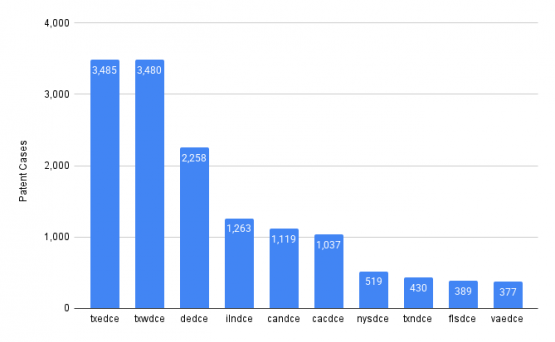
Patexia Insight 256: Patent Litigation Remains Concentrated in Key U.S. District Courts
U.S. District Court patent litigation continues to be one of the most consequential and data-rich arenas in intellectual property enforcement. Between July 1, 2020, and June 30, 2025, 18,352 patent cases were filed across federal courts, involving tens of…

Litigation Finance Tax Dropped From Trump S Big Beautiful Bill
In a major development for the billion dollar litigation finance industry, a tax provision targeting litigation funders has been removed from President Trump’s sweeping tax and spending legislation, dubbed the “Big, Beautiful Bill”,…