
Intel Scores Jury Win in $3B Patent Dispute with VLSI Over Licensing Defense
In a key development that could drastically alter the course of one of the tech industry's most watched and long-running legal battle, a Texas federal jury has sided with Intel Corporation in determining that Fortress Investment Group exercises control over both VLSI Technology LLC and Finjan Holdings. The verdict strengthens Intel’s argument that its existing 2012 patent license with Finjan should also extend to VLSI, potentially invalidating billions in prior damages awarded to VLSI for alleged patent infringement.
The eight-member jury reached its decision today, concluding that Fortress controlled both Finjan and VLSI at some point after the Intel-Finjan agreement was signed. The case now heads to U.S. District Judge Alan Albright, who will determine the legal implications of the jury’s finding, specifically, whether it releases Intel from liability under prior judgments.
Billions at Stake
VLSI has sued Intel multiple times for infringing semiconductor patents, securing jury awards of $2.18 billion in 2021 and $949 million in 2022. While the Federal Circuit has already overturned one of those verdicts and ordered a new trial on damages in another, this latest jury finding could undermine the remaining $900 million award, and potentially negate much of the multi-billion dollar liability if the court concludes that the Finjan license applies to VLSI.
Establishing Common Control
Over a three-day trial in the Western District of Texas, Intel’s legal team laid out a compelling argument to demonstrate Fortress’ decisive financial and governance control over VLSI and Finjan. Evidence presented included internal governance documents, SEC filings, Fortress’ website descriptions, and direct testimony from VLSI executives and Fortress’ intellectual property leadership.
Intel underscored Fortress' authority to approve or deny VLSI’s funding requests and its oversight of bank transactions and expenses, even if that control was not actively exercised. According to testimony, two of VLSI’s three board members and a majority of Finjan’s board are Fortress employees. These links, Intel argued, were sufficient to treat VLSI as an affiliate under the terms of the Finjan agreement.
Implications for the Tech Industry
This case has become a landmark for understanding the interaction between private equity-backed patent holding companies and the licensing agreements used to shield large tech firms. With Fortress at the center, the verdict may set a precedent on how courts interpret "common control" in licensing agreements involving portfolio companies owned by the same investment firm.
This article was assisted by AI and reviewed by the editor.
More insights
Structuring Solar IP Claims for Leverage: How System Claims and Induced or Contributory Infringement Can Expand Enforcement Options
Written by: Tyler S. Cox Key Takeaways: Nextpower’s mix of apparatus and system claims illustrates how claim strategy can expand enforcement flexibility. Additionally, carefully drafting patent claims can expand the scope of protection of the claim…
Patexia Insight 256: Patent Litigation Remains Concentrated in Key U.S. District Courts
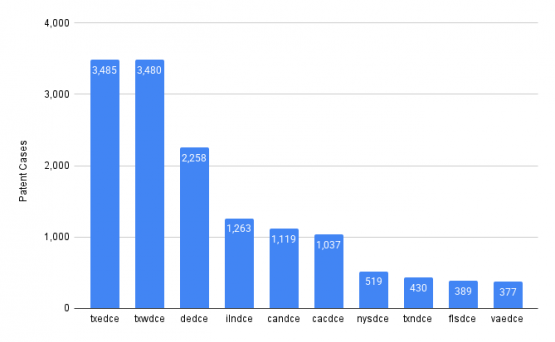
U.S. District Court patent litigation continues to be one of the most consequential and data-rich arenas in intellectual property enforcement. Between July 1, 2020, and June 30, 2025, 18,352 patent cases were filed across federal courts, involving tens of…

Litigation Finance Tax Dropped From Trump S Big Beautiful Bill
In a major development for the billion dollar litigation finance industry, a tax provision targeting litigation funders has been removed from President Trump’s sweeping tax and spending legislation, dubbed the “Big, Beautiful Bill”,…