
Google Faces $12 Million Jury Verdict in Google Voice Patent Dispute

Google found itself in the crosshairs of a legal battle as this Monday, a federal jury in Waco, Texas, delivered a $12 million verdict against them for infringing on five internet voice-calling patents owned by app maker Flyp. The dispute, which unfolded in a federal courtroom, revolved around Google's popular Google Voice service, a platform allowing users to make and receive telephone calls over the internet.
Flyp, a company specializing in a smartphone application that enables multiple phone numbers to connect to a single device, initiated legal action against Google in 2022. The lawsuit accused Google of engaging in "rampant infringement," hindering Flyp's ability to compete in the burgeoning cloud-based telephone service market, particularly amidst the backdrop of the COVID-19 pandemic and the surge in remote work arrangements. Flyp also alleged that discussions with Google Ventures in 2015 about a potential funding deal led to the unauthorized adoption of its technology by Google. The jury sided with Flyp, concurring that Google's implementation of the patented technology infringed on Flyp's innovation.
In response to the verdict, Google spokesperson Jose Castaneda expressed the company's intent to appeal, asserting that Google Voice was independently developed before Flyp's patents came into existence. Despite Google's stance, the jury's decision signals a significant setback for the tech giant in its legal skirmish with Flyp.
The legal battle underscores broader tensions within the tech industry surrounding intellectual property rights and competition. While Google vehemently denied Flyp's allegations and argued the invalidity of Flyp's patents, the jury's verdict underscores the complexities and risks inherent in navigating intellectual property disputes in a rapidly evolving technological landscape.
Flypsi is represented by Thomas M. Melsheimer, M. Brett Johnson, Michael A. Bittner, C. Charles Liu, Steven R. Laxton, Marisa Thompson, John K. Myers, Matthew R. McCullough, William M. Logan and Evan D. Lewis of Winston & Strawn LLP.
A version of this article was initially published by Reuters.
More insights
Structuring Solar IP Claims for Leverage: How System Claims and Induced or Contributory Infringement Can Expand Enforcement Options
Written by: Tyler S. Cox Key Takeaways: Nextpower’s mix of apparatus and system claims illustrates how claim strategy can expand enforcement flexibility. Additionally, carefully drafting patent claims can expand the scope of protection of the claim…
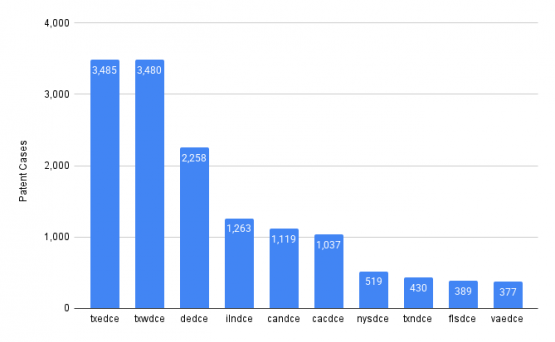
Patexia Insight 256: Patent Litigation Remains Concentrated in Key U.S. District Courts
U.S. District Court patent litigation continues to be one of the most consequential and data-rich arenas in intellectual property enforcement. Between July 1, 2020, and June 30, 2025, 18,352 patent cases were filed across federal courts, involving tens of…
Litigation Finance Tax Dropped From Trump S Big Beautiful Bill
In a major development for the billion dollar litigation finance industry, a tax provision targeting litigation funders has been removed from President Trump’s sweeping tax and spending legislation, dubbed the “Big, Beautiful Bill”,…