
Epic Games Prevails in $32.5 Million Patent Dispute Over Fortnite Concerts
Epic Games won a high-stakes patent lawsuit on today after a federal jury in Seattle found that the company did not infringe on technology used to stage its massively popular virtual concerts in Fortnite. The decision ends a legal battle brought by Utherverse Gaming LLC, which had sought $32.5 million in damages.
The dispute centered around a patent related to playing back recorded experiences in a virtual environment. Utherverse alleged that Epic relied on this patented method to host in-game performances by artists like Ariana Grande and Travis Scott, which attracted tens of millions of players. The company claimed Epic’s use of the technology enabled smooth playback of the events while managing large volumes of player avatars in real-time.
Epic denied any infringement, arguing that it used proprietary tools built into its Unreal Engine platform to develop and deploy the concerts. The game maker further contended that the patented concepts were neither novel nor applicable to its implementation.
Following a week-long trial and more than six hours of deliberation, the jury unanimously concluded that Epic did not violate any of the three patent claims presented. The decision rejected Utherverse’s argument that its intellectual property was central to the technical execution of the Fortnite events.
The patent at issue, granted in 2017 and originally filed in 2014 by two inventors, was later acquired by Utherverse as part of its IP portfolio. The company filed suit in 2021 after the high-profile concerts took place in 2020 and 2021.
While both parties declined to comment after the verdict, the ruling is likely to have broader implications for future claims involving interactive entertainment and virtual event technologies.
For Epic:
Sara Doudar, Daralyn J. Durie, Katherine E. McNutt, Timothy C. Saulsbury, and Eric C. Wiener of Morrison Foerster LLP, Bethany D. Bengfort of Turner Boyd Seraphine LLP, Mark A. Lemley of Lex Lumina PLLC and Christina J. McCullough and Antoine M. McNamara of Perkins Coie LLP.
For Utherverse:
Mark T. Deming, Emily McNally, Colby B. Springer, Melenie Van, and Miya Yusa of Polsinelli LLP and Kathryn Cole and John Mark Wilson of Moore & Van Allen PLLC.
More insights
Structuring Solar IP Claims for Leverage: How System Claims and Induced or Contributory Infringement Can Expand Enforcement Options
Written by: Tyler S. Cox Key Takeaways: Nextpower’s mix of apparatus and system claims illustrates how claim strategy can expand enforcement flexibility. Additionally, carefully drafting patent claims can expand the scope of protection of the claim…
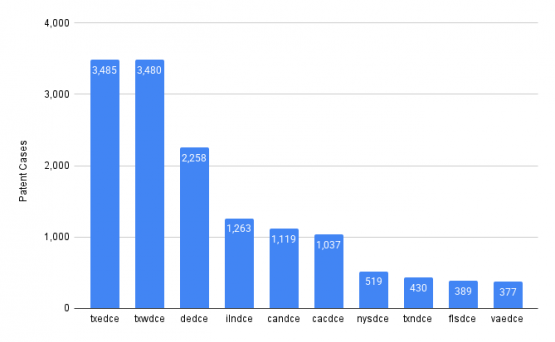
Patexia Insight 256: Patent Litigation Remains Concentrated in Key U.S. District Courts
U.S. District Court patent litigation continues to be one of the most consequential and data-rich arenas in intellectual property enforcement. Between July 1, 2020, and June 30, 2025, 18,352 patent cases were filed across federal courts, involving tens of…

Litigation Finance Tax Dropped From Trump S Big Beautiful Bill
In a major development for the billion dollar litigation finance industry, a tax provision targeting litigation funders has been removed from President Trump’s sweeping tax and spending legislation, dubbed the “Big, Beautiful Bill”,…