
Amazon Loses $46.7 Million Verdict in Voice-Assistant Patent Infringement Case

In a recent development, Amazon has been ordered by a jury in Delaware federal court to pay $46.7 million in damages for violating patents related to speech recognition and natural language processing. The lawsuit was filed by VB Assets, the successor to VoiceBox Technologies, alleging that Amazon's Alexa virtual assistant infringes on their voice-recognition patents.
Background:
The jury found that Amazon's Alexa violated four patents owned by VB Assets, which was the predecessor to VoiceBox Technologies. VoiceBox had developed voice-control software for major companies such as Toyota, Chrysler, Dodge, TomTom, and Magellan. The patents covered advancements in voice-based search technology.
Accusations:
VB Assets accused Amazon of copying its innovations and infringing on the patents, claiming that Amazon had poached dozens of VoiceBox employees starting in 2016. The lawsuit stated that Amazon and VoiceBox initially met in 2011 to discuss integrating VoiceBox's patented technology into Amazon products. Despite talks, no deal was reached.
Impact on VoiceBox:
The lawsuit alleged that Amazon's actions "crushed" VoiceBox's efforts to build a business around its patents. VoiceBox had explored a potential business relationship with Amazon in 2011, and meetings were held to discuss VoiceBox's patented technology. However, the introduction of Alexa and Echo products by Amazon in 2014 was deemed "strikingly similar" to the technology VoiceBox had presented in 2011.
Verdict and Judgment:
The jury's verdict in favor of VB Assets resulted in a $46.7 million judgment against Amazon. The court concluded that Amazon willfully violated the four patents held by VB Assets. Amazon has not yet responded to the outcome or indicated whether it plans to appeal.
For VB Assets: James Yoon and Ryan Smith of Wilson Sonsini Goodrich & Rosati. The verdict was reported earlier by Reuters.
This legal battle highlights the complexities and challenges surrounding intellectual property rights, particularly in the rapidly evolving field of voice-assistant technology. The outcome may have broader implications for the tech industry, emphasizing the importance of respecting patents and innovations in a highly competitive market.
More insights
Structuring Solar IP Claims for Leverage: How System Claims and Induced or Contributory Infringement Can Expand Enforcement Options
Written by: Tyler S. Cox Key Takeaways: Nextpower’s mix of apparatus and system claims illustrates how claim strategy can expand enforcement flexibility. Additionally, carefully drafting patent claims can expand the scope of protection of the claim…
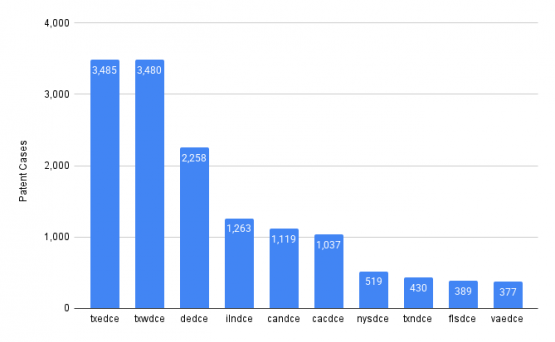
Patexia Insight 256: Patent Litigation Remains Concentrated in Key U.S. District Courts
U.S. District Court patent litigation continues to be one of the most consequential and data-rich arenas in intellectual property enforcement. Between July 1, 2020, and June 30, 2025, 18,352 patent cases were filed across federal courts, involving tens of…
Litigation Finance Tax Dropped From Trump S Big Beautiful Bill
In a major development for the billion dollar litigation finance industry, a tax provision targeting litigation funders has been removed from President Trump’s sweeping tax and spending legislation, dubbed the “Big, Beautiful Bill”,…