
Alice Challenge Unsuccessful for Failure to Establish Representative Claim
Contributed by Seyfarth Shaw. Originally published on Patexia; republished here as part of the LexDana archive.
Patent lawsuits often involve multiple patents and dozens of asserted patent claims. When asserting these claims lack patentable subject matter, it can be more convenient to describe the asserted claims in one representative form, or as some courts require, establish a “representative claim” that is generic to all claims and whose patent-eligibility can be imputed to all asserted claims. The District of Delaware recently denied a motion to dismiss for lack of patentable subject matter because the defendant failed to establish a representative claim.
In JSDQ Mesh Technologies LLC v. Fluidmesh Networks, LLC, Case No. 16-cv-212-GMS (D. Del. Sept. 6, 2016), Fluidmesh argued the asserted claims lacked patentable subject matter under the Alice/Mayo framework. Rather than analyze patent-eligibility on the merits, the court first asked whether it was proper to do so by determining (1) whether a representative claim had been established; (2) whether claim construction would impact the court’s section 101 analysis; and (3) whether any set of facts could exist that would render the claims patent-eligible.
The court focused on the representative claim issue, holding Fluidmesh had failed to carry its burden, as the moving party, of establishing a representative claim. Among the four patents, Fluidmesh identified one claim that it felt was representative, but JSDQ noted several other features in the other claims that would affect a section 101 analysis. The court agreed with JDSQ and found Fluidmesh’s discussion of the representative claim to be “conclusory” and without proper analysis.
The court then turned to the next two factors, whether claim construction or facts could exist that would affect patent eligibility. Again citing a lack of analysis in Fluidmesh’s position on these issues, the court found there could be some claim construction or facts that would impact its analysis, and that Fluidmesh did not prove otherwise.
Takeaway:
Patent infringement cases can involve so many claims and patents that a short cut is often the only way to conduct a claim analysis in any meaningful way. Here, the defendant could have bolstered its position by focusing more on the preliminary analysis that would allow the court to reach the question of patent-eligibility, and specifically, establishing a representative claim that can be analyzed to determine patent-eligibility of all claims.
Patrick T. Muffo is an author of the Seyfarth PTAB Blog and Associate in the firm’s Chicago office.
More insights
Structuring Solar IP Claims for Leverage: How System Claims and Induced or Contributory Infringement Can Expand Enforcement Options
Written by: Tyler S. Cox Key Takeaways: Nextpower’s mix of apparatus and system claims illustrates how claim strategy can expand enforcement flexibility. Additionally, carefully drafting patent claims can expand the scope of protection of the claim…
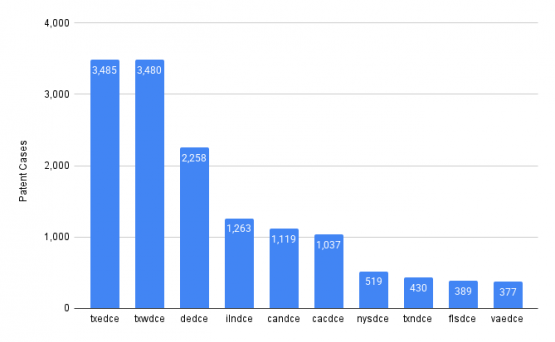
Patexia Insight 256: Patent Litigation Remains Concentrated in Key U.S. District Courts
U.S. District Court patent litigation continues to be one of the most consequential and data-rich arenas in intellectual property enforcement. Between July 1, 2020, and June 30, 2025, 18,352 patent cases were filed across federal courts, involving tens of…

Litigation Finance Tax Dropped From Trump S Big Beautiful Bill
In a major development for the billion dollar litigation finance industry, a tax provision targeting litigation funders has been removed from President Trump’s sweeping tax and spending legislation, dubbed the “Big, Beautiful Bill”,…