
Defining Indefiniteness: When Are Claim Limitations Contradictory?
Contributed by Knobbe Martens. Originally published on Patexia; republished here as part of the LexDana archive.
Written by: Alistair J. McIntyre & Jeremy Anapol
MAXELL, LTD., V. AMPEREX TECHNOLOGY LIMITED
Before Prost, Taranto, and Chen. Appeal from the United States District Court for the Western District of Texas.
Summary: Two claim limitations are not contradictory if they can be satisfied simultaneously.
Maxell asserted that Amperex infringed its battery patent. Amperex challenged the validity of the patent, alleging that the claims were indefinite under 35 U.S.C. § 112 for reciting (1) “wherein M1 represents at least one transition metal element selected from [cobalt, nickel, or manganese]” and (2) “wherein the content of [cobalt] in the transition metal M1 . . . is from 30% by mole to 100% by mole.” At claim construction, the district court agreed that limitations (1) and (2) were contradictory and therefore indefinite. The district court reasoned that the claim language was contradictory because limitation (1) only optionally required cobalt, but that limitation (2) necessarily required cobalt. Maxell appealed.
The Federal Circuit found that limitations (1) and (2) were not contradictory and therefore not indefinite. The court reasoned that a transition metal element could both contain cobalt, nickel, or manganese and include 30% by mole to 100% by mole of cobalt. Thus, the Federal Circuit reversed the district court’s judgment.
Editor: Sean Murray
More insights
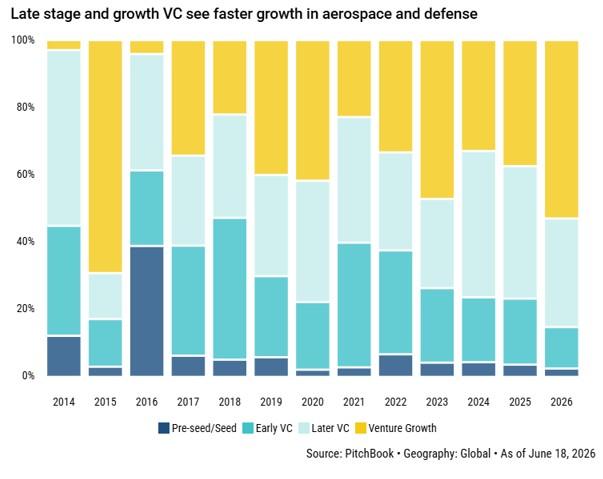
Space Tech Investment Grows in 2026 Amid Congressional Proposals Affecting Contractual IP Rights
Written by : Tom Cowan Key Takeaways : Private investment in space technology continues an upward trend in 2026, with increasing growth in late stage and venture growth deals, including private equity purchases. Against a backdrop of the “dual…
Amendments to Mexico S Federal Law for Protection of Industrial Property Inform More Flexible International Ip Strategy for Biotech Companies
Written by : J ason J. Jardine and Lizzy T. Do Key Takeaway: Amendments to Mexico’s Federal Law for Protection of Industrial Property align more with U.S. Patent and Trademark Office standards for restoring priority and application revival,…
Public Funding for Energy Innovation Impacts Private Intellectual Property Rights
Written by : Kimberly M. Papadantonakis, Ph.D. Key Takeaway : The value of intellectual property developed using government funds depends upon compliance with disclosure and licensing rules. Public investment is critical to the development and…