
Arbitration or Litigation, What is the Best Practice for SEP Patents?

Many of nowadays industry’s standards are based on patented technology. The most notorious examples come from the field of wireless communications with 2G GSM, 3G UMTS, 4G LTE, 5G, as well as wireless networks. They all rely on thousands of patented technologies to function properly. Given the importance, the companies operating in the Standard Essential Patent fields have developed rules when it comes to licensing these patents. Standards face a lot of competition while in development, so a trouble-free licensing environment ensures its ultimate success. Not only does the invention diffuse rapidly, but also the SEP inventors make sure to get their returns on the R&D investments. However, the rules are not perfect, and quite often, SEP inventors and implementors end up in disputes, and there is an ongoing debate on how to better resolve these issues with arbitration or litigation.
On Thursday, October 6th, USPTO and WIPO will organize a webinar discussing the use of alternative dispute resolution (ADR) for disputes relating to standard essential patents (SEPs). The WIPO Arbitration and Mediation Center will share its case experience in fair, reasonable, and non-discriminatory (FRAND) and SEP disputes and will moderate a panel discussion in the webinar.
International arbitration used as an alternative to litigation seems to be increasing lately. It has more flexibility with its simple rules. Depending on the dispute circumstances, arbitration may offer significant benefits when compared to litigation, such as reducing the likelihood of the dispute being litigated parallelly in multiple jurisdictions. Furthermore, in many cases, an arbitration proceeding results in cheaper costs in order to reach a resolution, and overall the practice will be less time-consuming. Especially in cases where privacy matters, arbitration guarantees privacy and confidentiality. However, in order for arbitration to work, both parties must agree to it. There is also another option to refer several issues to arbitration, especially the ones related to license fees and others such as infringement and invalidity to litigation.
More insights
Does the Uspto Issue Secret Patents on Aerospace Innovations
Written by : Tom Cowan Key Takeaways : Despite periodic mentions by aerospace innovators of “secret patents,” this author is not aware of any evidence of such patents. There may be confusion with “Secrecy Orders,” which apply to…
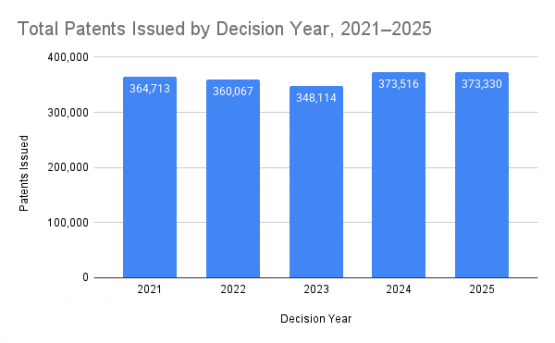
Patexia Patent Insight 20: Patent Issuance Levels Hold Steady Through 2025
Raw numbers often say more than commentary. In patent prosecution, issuance data provides one of the clearest signals of how much innovative activity is actually making its way through the system. Unlike filings, which can reflect short-term strategy…
Life Science Considerations on the Uspto S New Guidelines for Ai Assisted Inventorship
Written by : Robert J. Hilton, Ph.D. and Susan M. Janicki, Ph.D. On November 26, 2025, the United States Patent and Trademark Office (USPTO) issued revised guidelines for determining inventorship of AI-assisted inventions, [1] which is a significant…