
Simplicity is not a bar to patentability!
There is a cloud of complexity around the term ‘patents’. Patents, as is known, are granted over inventions. But a very common misunderstanding about patents is that they are granted for those inventions which are highly technical or complex in nature. Or that the simple inventions cannot be patented. Infact, when it all started way back in the seventeenth century and even today, few of the most interesting inventions are those which happen to be most the simple ones.
The convoluted procedures of patent office are enough to scare the common men. The criteria of patentability also, when viewed from a distance appear to be too legal for any common man to comprehend. However, given a thought, they could not have been worded in any simpler words. These criteria (which are almost uniform throughout the world) are:
- Novelty: that the invention should be new;
- Non-obviousness: that the invention must notbe obvious to a person who has ordinary skill in the art and is aware of previous work in the field.;
- Utility: that the invention must be of some degree of use (but for a purpose which is not immoral)
The criterion of non-obviousness is subjective in nature and to an extent, most troublesome too. However, mere simplicity does not bar a patent.
This cannot be explained more adequately than by citing few examples of granted patents. These are some items of common and everyday use to us, and it would make one wonder to know that they are patented inventions.
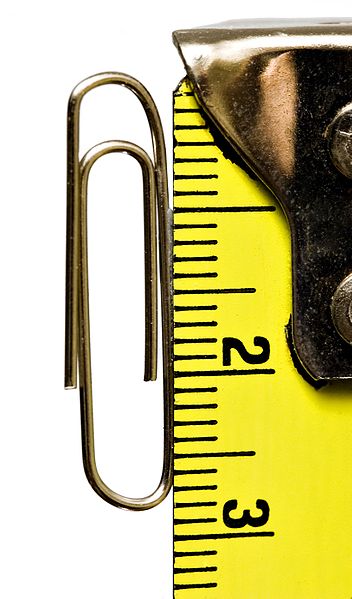
1. Paper clip
(Source:http://en.wikipedia.org/wiki/File:Small-paperclip.jpg; Author of image: Gregory F. Maxwell )

The first patent for a bent wire paper clip was awarded in the United States to Samuel B. Fay, in 1867. This clip was originally intended primarily for attaching tickets to fabric, although the patent recognized that it could be used to attach papers together. Fay received U.S. patent 64,088 on April 23, 1867.
2. Straws
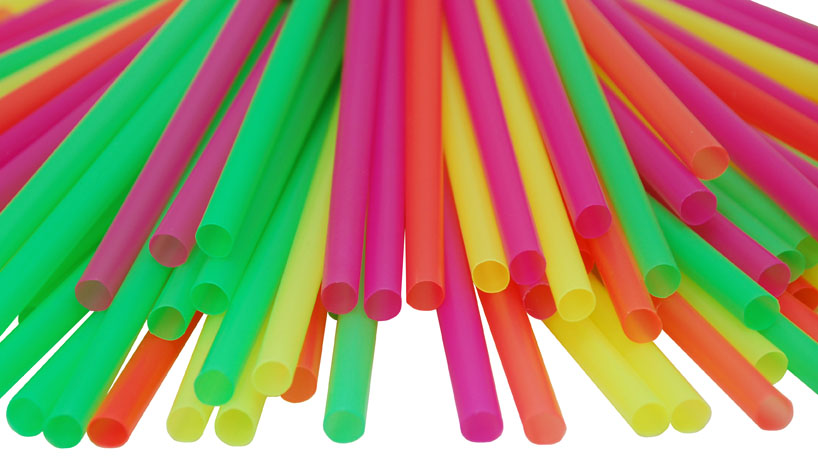

The credit for this goes to Marvin Stone, who in 1888 AD patented the spiral winding process to manufacture the first paper drinking straws.. Stone made his prototype straw by winding strips of paper around a pencil and gluing it together. Then he replaced the paper with paraffin-coated Manila paper so that straws do not become soggy.
3. Rubber bands
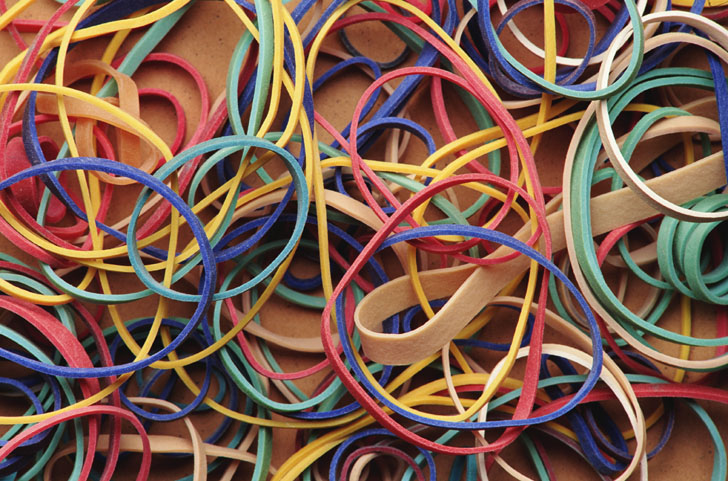
(Source: http://voiceinafrica.files.wordpress.com/2008/04/big-11.jpg)
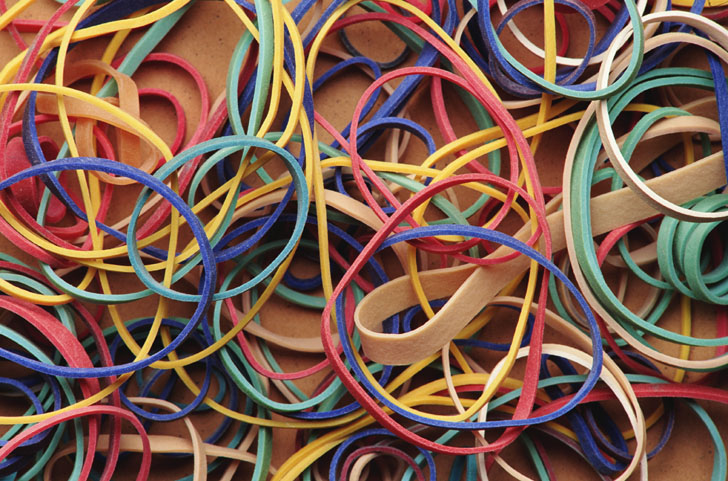
On March 17, 1845, Stephen Perry of the rubber manufacturing company M/s Perry and Co., patented the fist rubber bands made of vulcanized rubber.
4. Post-Its
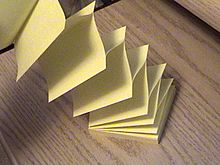
(Source: Transferred from http://en.wikipedia.org/wiki/Main_Page; transferred to Commons by http://commons.wikimedia.org/wiki/User:Sdrtirs using http://toolserver.org/~magnus/commonshelper.php)
Post-it notes are apiece of stationery with a re-adherable strip of adhesive applied to it. They were designed for temporarily attaching notes to documents and other surfaces. They were invented and patented by the 3M corporation.
Ofcourse, a lot of paper work has to be done and patent office procedures to be followed before even a simple invention receives a patent. Howsoever much mundane and time-consuming these procedures may be, but their importance lies in the tough testing through which they take every patent application so as to avoid frivolous patents from being granted.
Frivolity cannot be another name for simplicity. Being an inventor may be challenging, but it isn’t difficult!
More insights
Changes to Mexican Patent Law May Impact Life Science Patent Prosecution
Written by : Jason J. Jardine and Bailey R. Arenberg Key Takeaway : While recent amendments to Mexico’s patent laws promote faster prosecution and earlier decisions on patents, concerns abound as to the feasibility and integrity of the prosecution…
Why USPTO Rejected Your Patent Application?
You spent months perfecting your invention. Weeks writing the application. But the rejection letter arrived anyway. The culprit? Often, it's something surprisingly simple: your drawings. After reviewing thousands of patent applications, I've…
The Uspto S Evolving Approach to Patent Eligibility Insights From Director Squires Aipla Address
Written by : Philip M. Nelson On October 31, 2025, Director Squires spoke to the American Intellectual Property Law Association and provided a forceful statement on his view for the direction of patent law. Of particular interest were his comments on…