
Senate Seeks to Reduce Biosimilar Prices by Pruning Patent Thickets
Contributed by Knobbe Martens. Originally published on Patexia; republished here as part of the LexDana archive.
Written by: Susan M. Janicki, Ph.D. & Eric Furman, Ph.D.
On July 10, the Senate unanimously passed the Affordable Prescriptions for Patients Act of 2023 (S.150), which seeks to increase competition and lower drug prices by imposing limits on patent litigation related to biological products.[1] The bill attempts to target “patent thickets” or the large patent portfolios companies create with significantly overlapping patent rights seen by lawmakers as obstacles to competitors entering the market.
If passed, the law would modify the Biologics Price Competition and Innovation Act of 2009 (BPCIA) under which a sponsor may seek approval of a “biosimilar” product under the Public Health Service Act.[2] Under the BPCIA, the innovator of a biologic drug approved by the U.S. Food and Drug Administration (FDA) can sue the manufacturer of a biosimilar version of that drug for patent infringement based on the biosimilar’s filing of its application for FDA approval. The new law would amend the patent infringement statute[3] of the Patents Act to state that a biologic innovator may sue on no more than twenty patents that were filed four years after its biological drug was approved and/or that cover a manufacturing process not used by the biological innovator. The bill presumably aims to limit both the number of patents with later expiration dates that might be used to block the biosimilar from entering the market and the number of patents the biologic innovator is not using.
It is currently unclear how effective the law will be in limiting the number of patents asserted against a biosimilar applicant because the bill includes several exceptions and waivers. For example, there is no limit on the number of patents filed less than four years after the innovator of the biologic’s FDA approval. The limit also does not apply to patents that claim a method of using biologics “in therapy, diagnosis, or prophylaxis, such as an indication or method of treatment or other condition of use.” Additionally, courts may increase the number of patents in the interest of justice or for good cause.
The bill arrived for consideration by the House of Representatives on July 15, 2024.
[1] https://www.congress.gov/bill/118th-congress/senate-bill/150
[2] See, 42 U.S.C. § 262(k).
[3] See, 35 U.S.C. § 271(e)
More insights
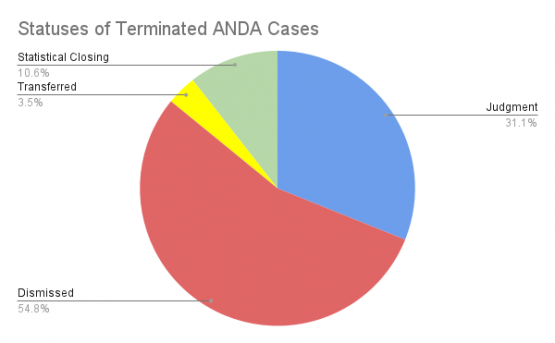
Patexia Insight 254: Rankings of Leading ANDA Litigation Attorneys
ANDA litigation remains one of the most demanding areas of patent law, where outcomes often hinge on the experience and judgment of individual attorneys. In disputes that determine when a generic drug can enter the market, the role of lead counsel is…
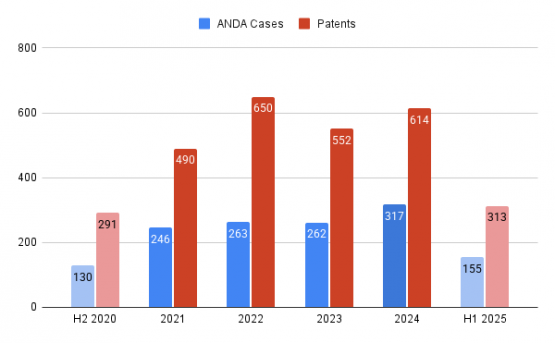
Patexia Insight 246: What the Latest Data Reveals About ANDA Litigation Trends
Abbreviated New Drug Application (ANDA) litigation remains one of pharma’s most contested arenas. With market exclusivity and billions in annual sales on the line, each case influences competition, pricing, and the speed at which patients see…
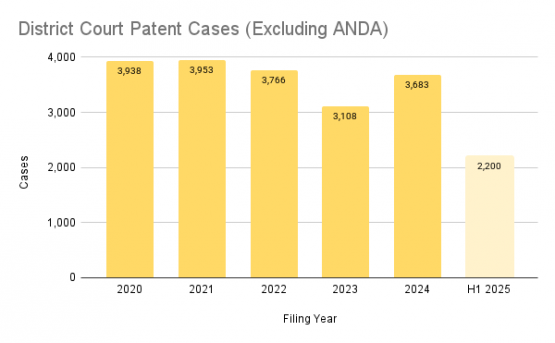
Patexia Insight 243: Patent Litigation Trends and Insights from the First Half of 2025
Over the past several years, patent litigation has gone through its share of ups and downs. Shifting legal standards, evolving strategies by patent owners and defendants, and broader economic factors have all played a role in defining the volume and nature…