
Remote Software Application Survives Alice Challenge
Contributed by Seyfarth Shaw. Originally published on Patexia; republished here as part of the LexDana archive.
Inventions directed to “pure software” have arguably had the most difficult time surviving Alice challenges. Software is often characterized as an “abstract idea” without more, and the inventive step requirement in Alice seems difficult to prove absent a significant technological advancement. The Northern District of Georgia recently rejected its special master in favor of allowing a network-based software patent survive a patentable subject matter challenge.
The case of Tridia Corp. v. Sauce Labs, Inc., (Case No. 1:15-cv-2284, N.D. Georgia Sept. 28, 2016) analyzed a patent directed to “remote execution of computer programs over a network.” The invention was specifically directed to a problem found in demo programs where a purchaser would like to first sample a computer program before purchasing it. Previously, a user must download the demo program, install it, and then sample the program. The patent at issue allowed the user to remotely execute the program to sample it, removing several steps that may otherwise cause the purchaser’s interest in the program to wane, and therefore cause the purchaser not to buy the program.
The court first discussed how identifying what is an “abstract idea” is not an easy task, something the Supreme Court and lower courts have all had difficulty with. The court noted the patent owner defined the invention differently, as improving “computer function by allowing on demand control of a remote computer without requiring installation of a remote control program on the remote computer.”
Applying the first step of Alice, the court noted it is best to analogize the patent at issue against prior inventions determined to be “abstract ideas” based on the difficulty of defining what does, and does not, constitute an abstract idea. The court found no such analogous cases, concluding “Plaintiff’s patent is not directed to a mathematical algorithm or a longstanding fundamental economic or longstanding business challenge, such that is claims are clearly directed to an abstract idea.”
Even assuming the first Alice step was met, the court concluded the invention was directed to a “technological advance.” The patent “overcomes a flaw in existing technology—the inability to remotely install software on-demand without preinstallation.” The court therefore found, under either Alice step, that the claims are directed to patent-eligible subject matter, at least at the pleadings stage.
Takeaway:
This case involves a fairly typical Alice analysis, but emphasizes the point that an “abstract idea” is so poorly defined by the case law that analogizing to what does, and does not, constitute an abstract idea is likely the best and simplest analysis. This presents somewhat of a “chicken and the egg” problem in that courts must set precedent to allow such analogizing, i.e., a plaintiff or defendant cannot analogize to that which has not been decided. Yet, with no direct comparisons between inventions, analogizing to past cases will allow more examples of the line between patentable and unpatentable subject matter.
Patrick T. Muffo is editor of the Seyfarth PTAB Blog and Partner in the firm’s Chicago office. For more information, please contact a member of the Patent Practice Group, your Seyfarth Shaw LLP attorney, or Patrick T. Muffo at pmuffo@seyfarth.com.
More insights
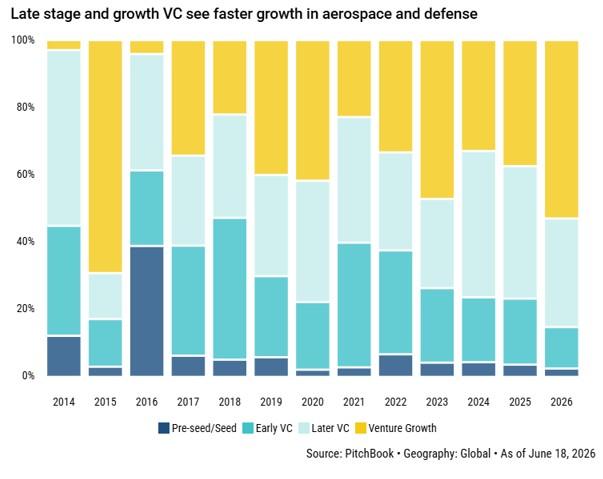
Space Tech Investment Grows in 2026 Amid Congressional Proposals Affecting Contractual IP Rights
Written by : Tom Cowan Key Takeaways : Private investment in space technology continues an upward trend in 2026, with increasing growth in late stage and venture growth deals, including private equity purchases. Against a backdrop of the “dual…
Amendments to Mexico S Federal Law for Protection of Industrial Property Inform More Flexible International Ip Strategy for Biotech Companies
Written by : J ason J. Jardine and Lizzy T. Do Key Takeaway: Amendments to Mexico’s Federal Law for Protection of Industrial Property align more with U.S. Patent and Trademark Office standards for restoring priority and application revival,…
Public Funding for Energy Innovation Impacts Private Intellectual Property Rights
Written by : Kimberly M. Papadantonakis, Ph.D. Key Takeaway : The value of intellectual property developed using government funds depends upon compliance with disclosure and licensing rules. Public investment is critical to the development and…