
Janssen and Celltrion: Remicade Biosimilar Patent Dance
Contributed by Knobbe Martens. Originally published on Patexia; republished here as part of the LexDana archive.
Written by Daniel A. Kamkar and Agnes Juang, Ph.D.
Janssen Biotech Inc. and Celltrion Healthcare have taken the next step over Janssen’s blockbuster arthritis biologic medicine Remicade (infliximab) and Celltrion’s biosimilar, as required by the Biologics Price Competition and Innovation Act (BPCIA) “Patent Dance.” Janssen, although arguing it to be unnecessary under the BPCIA, has defensively filed a subsequent suit[1] in Massachusetts federal court against Celltrion in order to avoid the possibility of being barred from recovering lost profit damages and limited to merely royalties. The suit is presided over by Judge Wolf.
Under the BPCIA, biologic and biosimilar applicants must engage in “good-faith negotiations” which must continue during the scope of their infringement suits. During these negotiations, they must exchange information regarding the processes used to manufacture their drugs. The BPCIA also states that these good-faith negotiations trigger a 30-day deadline for the biologic maker to file a suit in order to claim lost profit damages.[2]
In this case, Janssen and Celltrion had previously entered into negotiations and Janssen previously filed suit against Celltrion over Janssen’s U.S. Patent No. 7,598,083. However, Judge Wolf stated that although some negotiations were had, good-faith negotiations, which would trigger the 30-day window, were never entered into because not all the requirements of the BPCIA were complied with[3], namely the requirement to discuss a possible settlement of the case taking into account the court’s guidance so far.
With this decision, Janssen and Celltrion attempted to enter into good faith negotiations once more, but Celltrion contended that another 30-day window and required Janssen to file the current suit or face losing lost profits once more. Janssen filed the current suit with essentially the same allegations as their original complaint, stating to a letter to Judge Wolf:[4]
"Although Janssen strongly disagrees with defendants’ position, filing the new action avoids the unnecessary trouble of addressing this issue should it arise in the future, Janssen believes that filing the new complaint also allows us to moot defendants’ pending motion to dismiss and simply proceed to trial on the new action, as your honor has previously suggested.”
[1] https://dlbjbjzgnk95t.cloudfront.net/0930000/930158/https-ecf-mad-uscour...
[2] https://www.law360.com/articles/898002/judge-lays-out-bpcia-patent-dance...
[3] https://www.bna.com/janssen-files-infringement-n73014451945/
[4] https://www.law360.com/ip/articles/930158
More insights
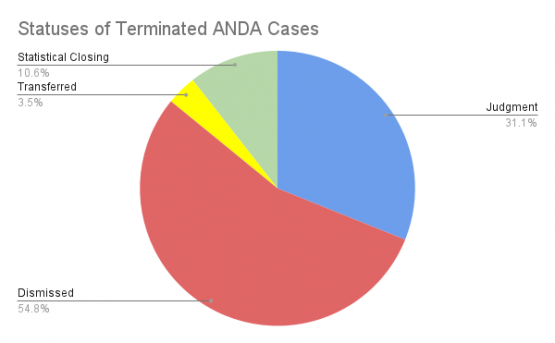
Patexia Insight 254: Rankings of Leading ANDA Litigation Attorneys
ANDA litigation remains one of the most demanding areas of patent law, where outcomes often hinge on the experience and judgment of individual attorneys. In disputes that determine when a generic drug can enter the market, the role of lead counsel is…
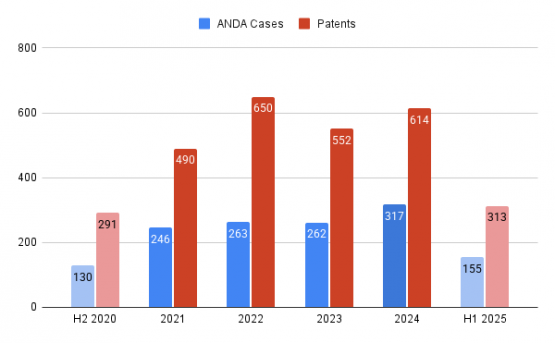
Patexia Insight 246: What the Latest Data Reveals About ANDA Litigation Trends
Abbreviated New Drug Application (ANDA) litigation remains one of pharma’s most contested arenas. With market exclusivity and billions in annual sales on the line, each case influences competition, pricing, and the speed at which patients see…
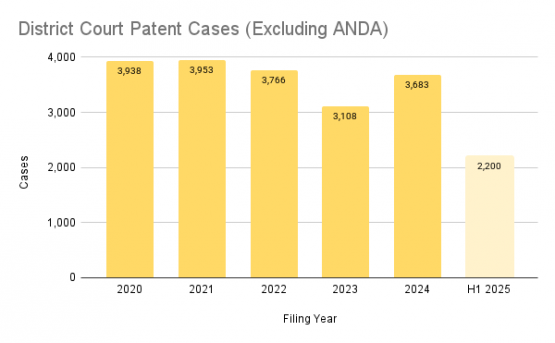
Patexia Insight 243: Patent Litigation Trends and Insights from the First Half of 2025
Over the past several years, patent litigation has gone through its share of ups and downs. Shifting legal standards, evolving strategies by patent owners and defendants, and broader economic factors have all played a role in defining the volume and nature…