
International Patent Activity and Government Policies in the Aerospace, Defense & Security Industries
Contributed by Knobbe Martens. Originally published on Patexia; republished here as part of the LexDana archive.
Written by: Shloka Raghavan
Patent activity in the aerospace, defense, and security industries decreased during 2024, Army Technology reports. The story references statistics from GlobalData that the “global aerospace, defense & security industries experienced a 25% decline in patent filings in Q3 2024 compared with the previous quarter.” Further, “[p]atenting activity was driven by the U.S. with a 26% share of total patent filings.”
The U.S. share was the largest (with China close behind at 24%) and may be due in part to domestic government policies. A story by Space Insider reports that the U.S. appears to take a more market driven approach to aerospace patents, citing a January 2025 study published in Economics and Management Innovation. The study “spotlights how U.S. patent policy supports commercial space enterprises through open market access, technology transfer, and government contracts.” The U.S. policy since the early 2000s reportedly “has encouraged private-sector involvement in space.”
As a result, the approach taken by the U.S. may be more successful in encouraging patent filings than approaches taken in other countries, such as European countries and China.
There are several reasons for this outcome. The study published in Economics and Management Innovation notes the European approach favors “long-term policy frameworks and international cooperation.” However, this may be less successful in encouraging patent filings than the U.S., despite incentives provided by various European countries, due at least in part to “Europe’s regulatory complexity and decentralized approach.”
China has taken a different path than the U.S. and Europe. Space Insider notes that the Chinese government focuses on providing subsidies, tax breaks, and state-led initiatives in the aerospace sector. Patent filings are encouraged by financial rewards, such as a 25% corporate tax reduction for patent holders. However, most patent filings by Chinese companies are domestic due to cost considerations. As a result, while the volume of patents in China is high, “long-term protection and international competitiveness are still developing.”
In summary, Space Insider notes that “as commercial space activity accelerates, the ability to protect and leverage intellectual property will become increasingly critical. Companies operating internationally will have to navigate these diverse patent landscapes to secure market position and long-term growth.”
The full story by Airforce Technology can be found here.
The full story by Space Insider can be found here.
More insights
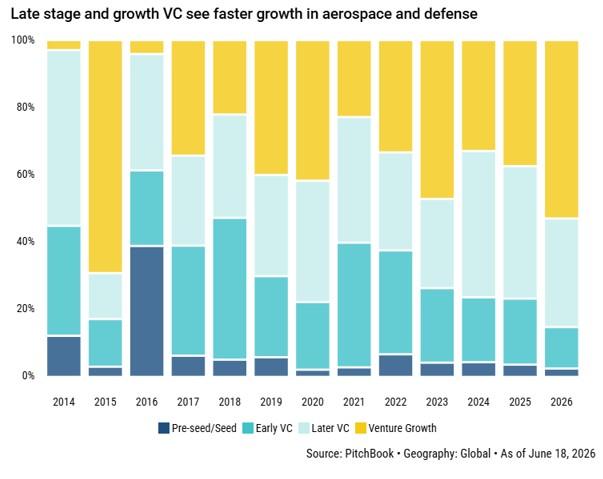
Space Tech Investment Grows in 2026 Amid Congressional Proposals Affecting Contractual IP Rights
Written by : Tom Cowan Key Takeaways : Private investment in space technology continues an upward trend in 2026, with increasing growth in late stage and venture growth deals, including private equity purchases. Against a backdrop of the “dual…
Amendments to Mexico S Federal Law for Protection of Industrial Property Inform More Flexible International Ip Strategy for Biotech Companies
Written by : J ason J. Jardine and Lizzy T. Do Key Takeaway: Amendments to Mexico’s Federal Law for Protection of Industrial Property align more with U.S. Patent and Trademark Office standards for restoring priority and application revival,…
Public Funding for Energy Innovation Impacts Private Intellectual Property Rights
Written by : Kimberly M. Papadantonakis, Ph.D. Key Takeaway : The value of intellectual property developed using government funds depends upon compliance with disclosure and licensing rules. Public investment is critical to the development and…