
Exploring the Use of 'March-In' Rights: Biden Administration's Consideration on Drug Patents and Pricing

The Biden administration is exploring the use of "march-in" rights established in the 1980 Bayh-Dole Act, which has never been utilized before. This provision allows federal agencies to request licensing agreements for inventions developed under federal funding if certain conditions are met. These conditions include the lack of progress in practical application, unmet health or safety needs, failure to meet public use requirements, or violations of relevant regulations.
The discussion primarily focuses on the first two provisions regarding practical application and health needs. Notably, this provision differs from another law allowing the government to use a patented invention while compensating the patent holder. Previous attempts to utilize march-in rights haven't been based on pricing concerns, although recent evaluations have considered pricing as a factor for invoking these rights.
The White House advisor, Lael Brainard, emphasized a willingness to allow other companies to provide taxpayer-funded drugs at reasonable prices if drug companies refuse. This approach is in contrast to previous administrations, raising debates around the role of march-in rights in regulating drug prices.
President Biden highlighted that 25 drug companies control about 70% of the industry's revenues, though this percentage doesn't necessarily indicate monopolistic practices due to the individually differentiated patented drugs.
However, concerns are raised about the practicality of invoking march-in rights, particularly regarding which companies could provide drugs at lower prices and the challenges of manufacturing, especially for complex biologics and antibodies. The potential for lengthy court battles following such actions is also anticipated.
The Biden administration's interest in utilizing march-in rights is seen as part of its broader strategy to address rising drug prices and enhance competition within the pharmaceutical industry. This move aligns with Biden's efforts to prioritize healthcare issues and combat the influence of the pharmaceutical industry in his agenda, especially in preparation for the upcoming election.
More insights
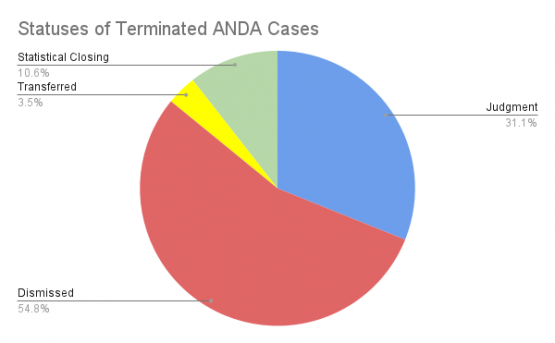
Patexia Insight 254: Rankings of Leading ANDA Litigation Attorneys
ANDA litigation remains one of the most demanding areas of patent law, where outcomes often hinge on the experience and judgment of individual attorneys. In disputes that determine when a generic drug can enter the market, the role of lead counsel is…
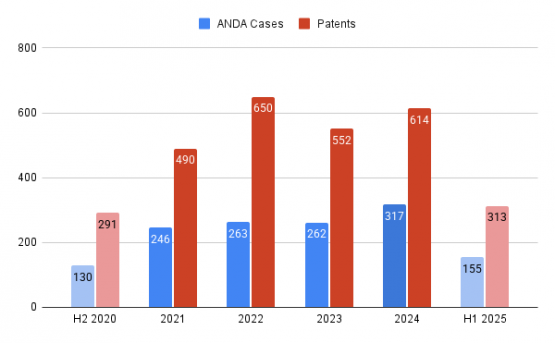
Patexia Insight 246: What the Latest Data Reveals About ANDA Litigation Trends
Abbreviated New Drug Application (ANDA) litigation remains one of pharma’s most contested arenas. With market exclusivity and billions in annual sales on the line, each case influences competition, pricing, and the speed at which patients see…
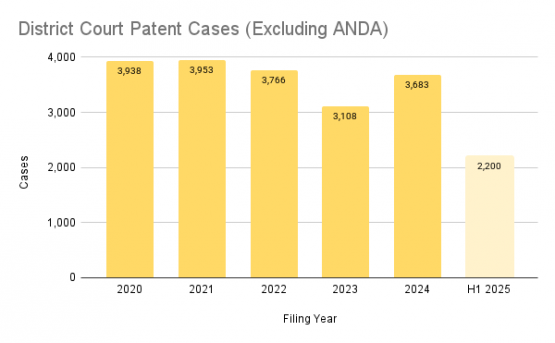
Patexia Insight 243: Patent Litigation Trends and Insights from the First Half of 2025
Over the past several years, patent litigation has gone through its share of ups and downs. Shifting legal standards, evolving strategies by patent owners and defendants, and broader economic factors have all played a role in defining the volume and nature…