
Emergence of Satellite Energy Stealth Startup and the Importance of IP Strategy
Contributed by Knobbe Martens. Originally published on Patexia; republished here as part of the LexDana archive.
Written by:Sameer Khan
Key Takeaway: A startup in satellite energy transmission emerged from stealth with an oversubscribed seed round of $10 million. Investors and developers of energy technologies can benefit from proactive IP protection efforts.
Today, the space industry faces significant limitations on satellite operations with respect to its dependencies on direct solar energy. Many satellites currently spend roughly one-third of their time in eclipse, relying on onboard batteries and forcing operators to design missions around energy constraints. These limitations have historically pushed satellites into sun-synchronous orbits that maximize solar exposure but may not align with optimal mission positioning.
One company in this field is Mantis Space, which recently emerged from stealth with an oversubscribed seed round exceeding $10 million. Mantis Space is a New Mexico-based startup seeking to develop an orbital power network for spacecraft exposure to sunlight and to transmit energy to satellites when they pass through Earth's shadow.
For companies developing next-generation spacecraft, these technological shifts could significantly reshape both system architecture and competitive positioning. Mantis Space CEO Eric Truitt stated, "The impact of power infrastructure is you get more done in orbit. You get more data. You can move faster, stay in mission longer, and fly in orbits that matter more."
As new technologies emerge in the space industry, intellectual property strategy will play a key role in capturing long-term value. For example, technologies related to satellite power transmission systems, minimizing energy conversion losses, and laser aiming and receiver interfaces are possible areas for patent activity. These energy technologies can enable other innovations, such as orbital data centers. For aerospace companies developing enabling technologies, early attention to patent portfolio development, patent landscaping analyses, and strategic IP positioning can be critical to protecting innovation while mitigating risk. In a rapidly expanding space economy projected to approach $1 trillion by 2040, companies that align technical development with a proactive IP strategy will be better positioned for the next generation of space innovation.
More insights
Space Tech Investment Grows in 2026 Amid Congressional Proposals Affecting Contractual IP Rights
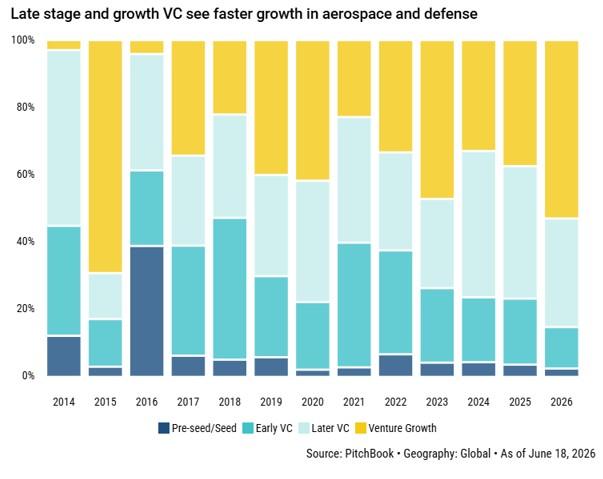
Written by : Tom Cowan Key Takeaways : Private investment in space technology continues an upward trend in 2026, with increasing growth in late stage and venture growth deals, including private equity purchases. Against a backdrop of the “dual…
Amendments to Mexico S Federal Law for Protection of Industrial Property Inform More Flexible International Ip Strategy for Biotech Companies
Written by : J ason J. Jardine and Lizzy T. Do Key Takeaway: Amendments to Mexico’s Federal Law for Protection of Industrial Property align more with U.S. Patent and Trademark Office standards for restoring priority and application revival,…
Public Funding for Energy Innovation Impacts Private Intellectual Property Rights
Written by : Kimberly M. Papadantonakis, Ph.D. Key Takeaway : The value of intellectual property developed using government funds depends upon compliance with disclosure and licensing rules. Public investment is critical to the development and…